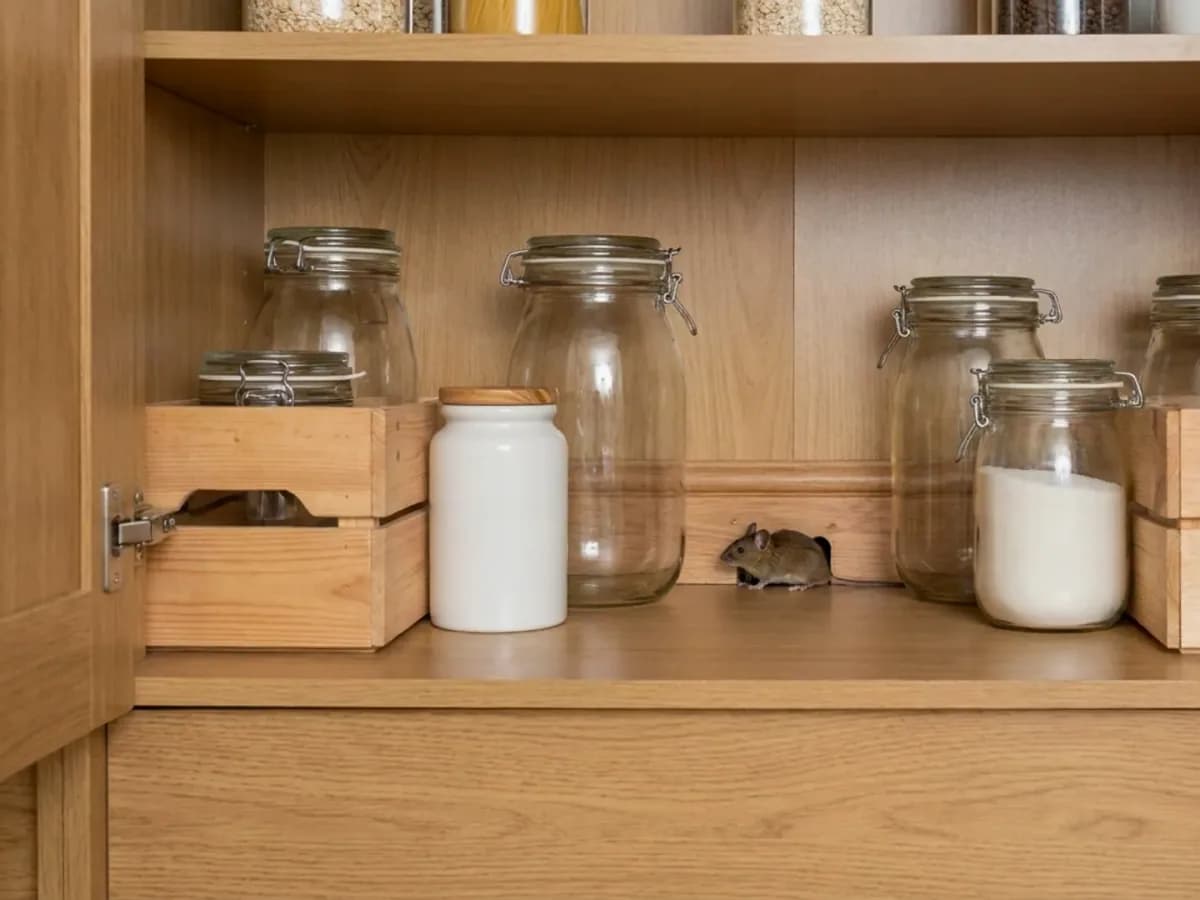
Mice are common across the UK, but not every small rodent seen in a garden, shed or property is the same pest problem. The important question is whether the activity is outside wildlife or indoor mouse activity that needs control.
The house mouse is the species most strongly linked with infestations inside homes and businesses. It can use small gaps, wall voids, kitchen units, loft edges and service runs to move around a building.
Field mice and yellow-necked mice are more strongly associated with outdoor habitats, gardens and rural edges, although they can still enter buildings when food, shelter or warmth draws them in.
Harvest mice are much smaller and are usually a countryside species rather than a typical property infestation. They are often discussed because people want to identify what they have seen, but they are not usually the mouse found in a kitchen cupboard.
The practical signs of a house mouse problem include small droppings, gnawed packaging, scratching in voids, a stale odour and movement around kitchens or storage. These signs matter more than trying to identify the mouse from a quick glimpse.
Mice are often confused with young rats. Rat droppings are larger, rat bodies are heavier and rat behaviour is usually more cautious. Mice are smaller, more curious and can move through much narrower gaps.
If mouse activity is inside a property, identification should lead into action: trace the movement routes, reduce food access, treat the active issue and close the small entry points that let mice keep circulating.
Riddex handles mouse control by looking at the property pattern, not just the sighting. Kitchens, cupboards, pipe gaps, lofts and wall voids all need to be considered when activity is indoors.